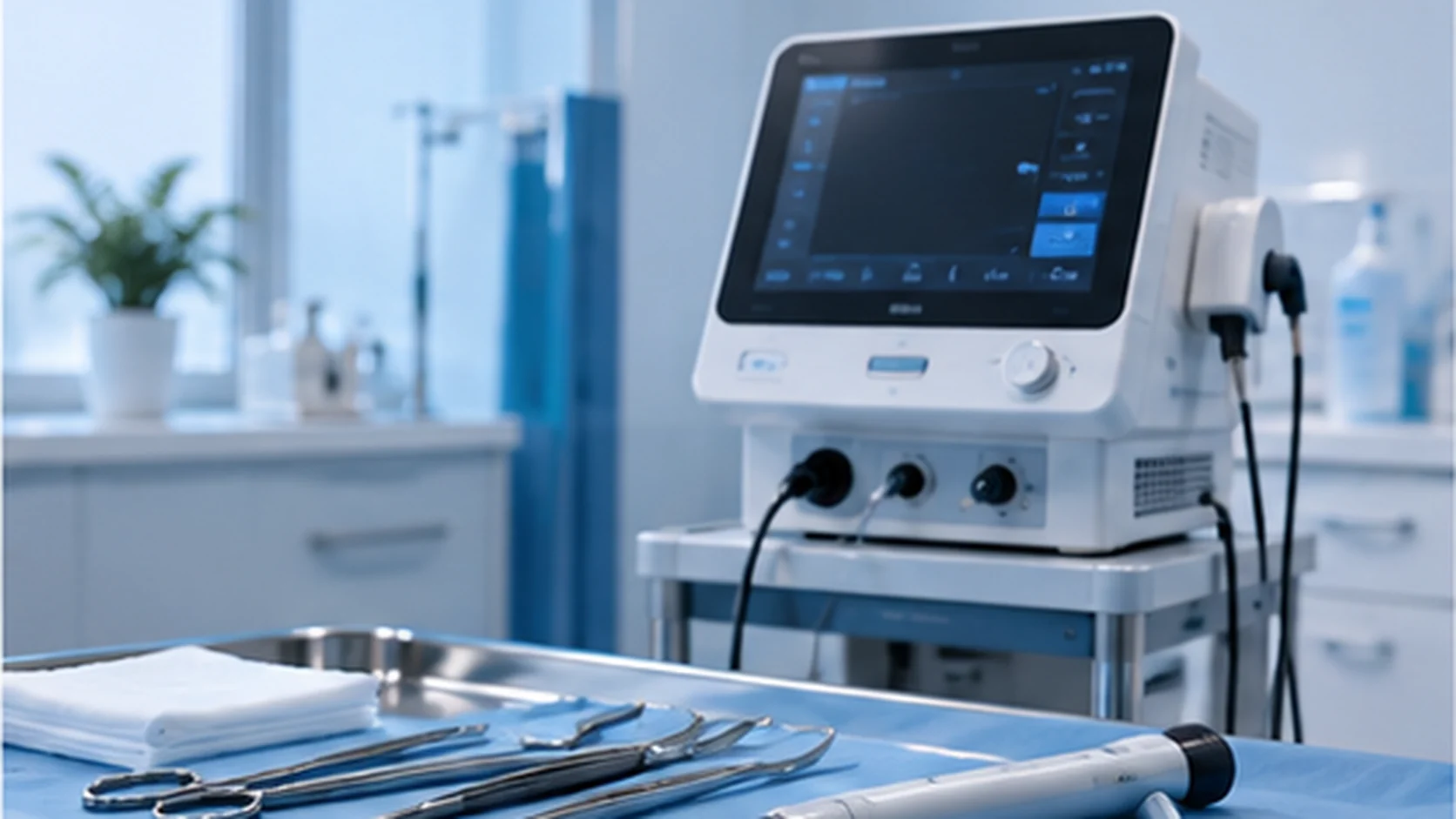
A minimally invasive operation for symptomatic haemorrhoids, designed to reduce blood flow to the haemorrhoids and lift prolapsing tissue without cutting it away.
THD surgery, also known as Transanal Haemorrhoidal Dearterialisation, may be considered when bleeding, prolapse, itching or discomfort has not settled with creams, dietary changes or clinic-based treatments. Mr Adam Kimble assesses the full range of haemorrhoidal disease and will explain whether THD or another option is more appropriate for you.
What is THD surgery?
THD is carried out through the anal canal, so there are no external cuts or skin wounds. A Doppler ultrasound probe identifies the arteries feeding the haemorrhoids, which are then tied off with dissolvable stitches. Where prolapse is present, a mucopexy stitch can also lift the tissue back into position. The reduced blood supply allows the haemorrhoidal tissue to shrink over the following weeks.
Who may benefit from THD surgery?
- Recurrent bright red bleeding on wiping or in the toilet bowl
- Haemorrhoids that prolapse during or after opening the bowels
- Ongoing itching, mucus discharge or a feeling of incomplete emptying
- Discomfort, swelling or repeated flare-ups
- Symptoms persisting despite fibre, fluids, topical treatment or rubber band ligation
- Patients wishing to avoid the more painful recovery of conventional haemorrhoidectomy where suitable
Your treatment options
THD is one part of the haemorrhoid treatment pathway. The right option depends on the grade of haemorrhoids, whether prolapse is present, previous treatment and your overall symptoms.
Doppler-guided stitches are placed to reduce the arterial blood supply feeding the internal haemorrhoids, allowing them to shrink over time.
Where haemorrhoids prolapse, a continuous stitch can lift and secure the lax tissue higher in the rectum while the feeding arteries are treated.
Depending on your grade and symptoms, alternatives may include lifestyle measures, topical treatment, rubber band ligation or the Rafaelo® radiofrequency procedure.
For very large, fixed or unsuitable haemorrhoids, excisional surgery may offer the more appropriate and durable option, despite a longer recovery.
Recovery & aftercare
THD is usually performed as a day-case procedure. Most patients go home the same day with pain relief, laxatives and clear aftercare instructions. In the first few days, a dull ache, pressure, small amounts of bleeding or urinary hesitancy can occur. Many people return to desk-based work within about a week, with heavier activity resumed a little later as comfort allows.

Rectal bleeding should never automatically be assumed to be haemorrhoids. Depending on your age, symptoms and family history, a colonoscopy or flexible sigmoidoscopy may be advised first to rule out other causes.
Recovery, honestly
THD is designed to avoid the open wounds of a conventional haemorrhoidectomy, so recovery is often more comfortable. Many people feel substantially better within one to two weeks, although the haemorrhoidal tissue continues to shrink over several weeks. Recurrence can still occur, and some studies suggest it may be more common than after excisional surgery, so the trade-off between comfort and durability is discussed clearly before you decide.
Risks & considerations
Possible risks include pain or a temporary urge to open the bowels, bleeding, urinary retention, infection, thrombosed external haemorrhoids, temporary difficulty controlling wind, stitch discomfort and recurrence of symptoms. Rarely, further treatment or a different operation is needed.