
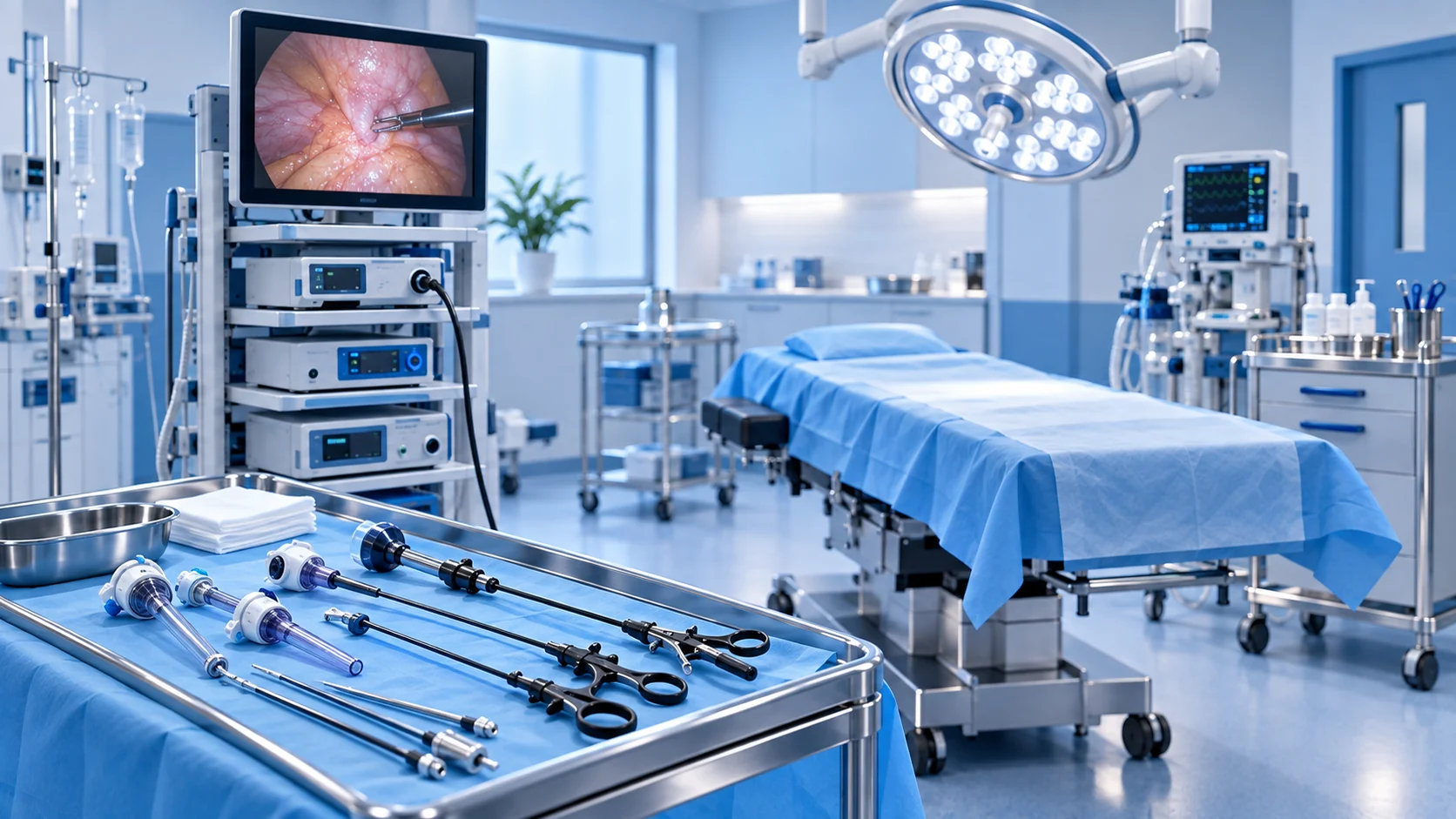
Laparoscopic Hernia Repair

Keyhole surgery for hernias, smaller incisions, often a faster and more comfortable recovery.

Laparoscopic hernia repair uses small incisions and a camera to repair a hernia from the inside, often supporting a faster return to normal activity and less post-operative discomfort than open surgery. Mr Kimble uses this technique where it’s the more appropriate option for your hernia.

What is laparoscopic hernia repair?

Also known as keyhole hernia repair, this technique uses several small incisions rather than one larger cut, with a camera guiding precise placement of mesh to reinforce the weakened area. It’s commonly used for inguinal and some incisional hernias.

Why laparoscopic repair may be recommended

Not every hernia is suited to a laparoscopic approach, Mr Kimble will assess your case and explain honestly if open repair is the safer or more effective choice.

Your treatment options

Laparoscopic technique is tailored to your hernia type and whether it’s your first repair or a recurrence.

01 — TEP (Totally Extraperitoneal) repair

Instruments work behind the abdominal muscle layer, avoiding entry into the abdominal cavity itself.

02 — TAPP (Transabdominal Preperitoneal) repair

An alternative laparoscopic route entering the abdominal cavity briefly to place the mesh, sometimes preferred for recurrent hernias.

03 — Bilateral repair

Hernias on both sides can typically be repaired in the same operation through the same small incisions.

04 — Conversion to open repair

Rarely needed, but if the laparoscopic approach isn’t suitable partway through, conversion to open repair is a safe fallback, explained beforehand as a possibility.

Recovery & aftercare

Most repairs are day-case, so you’ll go home the same day. You’ll leave with a clear plan for pain relief, activity restrictions and when it’s safe to return to lifting and exercise, plus structured follow-up to check the repair is healing well.

When to seek urgent help

If the lump suddenly becomes very painful, firm, or won’t go back in, especially with nausea or vomiting, seek medical help straight away, as this can be a surgical emergency.

At a glance

Procedure

Day-case

Anaesthetic

General

Recovery

1–4 weeks

Referral

Not required

Book a consultation
Private appointments in Torquay, usually within days.
Related treatments

Laparoscopic hernia repair uses small incisions and a camera to repair a hernia from the inside, often supporting a faster return to normal activity and less post-operative discomfort than open surgery. Mr Kimble uses this technique where it’s the more appropriate option for your hernia.

What is laparoscopic hernia repair?

Also known as keyhole hernia repair, this technique uses several small incisions rather than one larger cut, with a camera guiding precise placement of mesh to reinforce the weakened area. It’s commonly used for inguinal and some incisional hernias.

Why laparoscopic repair may be recommended

Not every hernia is suited to a laparoscopic approach, Mr Kimble will assess your case and explain honestly if open repair is the safer or more effective choice.

Your treatment options

Laparoscopic technique is tailored to your hernia type and whether it’s your first repair or a recurrence.

01 — TEP (Totally Extraperitoneal) repair

Instruments work behind the abdominal muscle layer, avoiding entry into the abdominal cavity itself.

02 — TAPP (Transabdominal Preperitoneal) repair

An alternative laparoscopic route entering the abdominal cavity briefly to place the mesh, sometimes preferred for recurrent hernias.

03 — Bilateral repair

Hernias on both sides can typically be repaired in the same operation through the same small incisions.

04 — Conversion to open repair

Rarely needed, but if the laparoscopic approach isn’t suitable partway through, conversion to open repair is a safe fallback, explained beforehand as a possibility.

Recovery & aftercare

Most repairs are day-case, so you’ll go home the same day. You’ll leave with a clear plan for pain relief, activity restrictions and when it’s safe to return to lifting and exercise, plus structured follow-up to check the repair is healing well.

When to seek urgent help

If the lump suddenly becomes very painful, firm, or won’t go back in, especially with nausea or vomiting, seek medical help straight away, as this can be a surgical emergency.

Laparoscopic hernia repair uses small incisions and a camera to repair a hernia from the inside, often supporting a faster return to normal activity and less post-operative discomfort than open surgery. Mr Kimble uses this technique where it’s the more appropriate option for your hernia.

What is laparoscopic hernia repair?

Also known as keyhole hernia repair, this technique uses several small incisions rather than one larger cut, with a camera guiding precise placement of mesh to reinforce the weakened area. It’s commonly used for inguinal and some incisional hernias.

Why laparoscopic repair may be recommended

Not every hernia is suited to a laparoscopic approach, Mr Kimble will assess your case and explain honestly if open repair is the safer or more effective choice.

Your treatment options

Laparoscopic technique is tailored to your hernia type and whether it’s your first repair or a recurrence.

01 — TEP (Totally Extraperitoneal) repair

Instruments work behind the abdominal muscle layer, avoiding entry into the abdominal cavity itself.

02 — TAPP (Transabdominal Preperitoneal) repair

An alternative laparoscopic route entering the abdominal cavity briefly to place the mesh, sometimes preferred for recurrent hernias.

03 — Bilateral repair

Hernias on both sides can typically be repaired in the same operation through the same small incisions.

04 — Conversion to open repair

Rarely needed, but if the laparoscopic approach isn’t suitable partway through, conversion to open repair is a safe fallback, explained beforehand as a possibility.

Recovery & aftercare

Most repairs are day-case, so you’ll go home the same day. You’ll leave with a clear plan for pain relief, activity restrictions and when it’s safe to return to lifting and exercise, plus structured follow-up to check the repair is healing well.

When to seek urgent help

If the lump suddenly becomes very painful, firm, or won’t go back in, especially with nausea or vomiting, seek medical help straight away, as this can be a surgical emergency.

At a glance
Procedure
Anaesthetic
Recovery
Referral
Book Laparoscopic Hernia Repair treatment

Private appointments in Torquay, usually within days. No GP referral needed.

Related treatments